Hair Patch vs Hair Transplant: The 2026 Honest Comparison
A no-marketing, side-by-side comparison of cost, results, recovery, risk and long-term outcome.
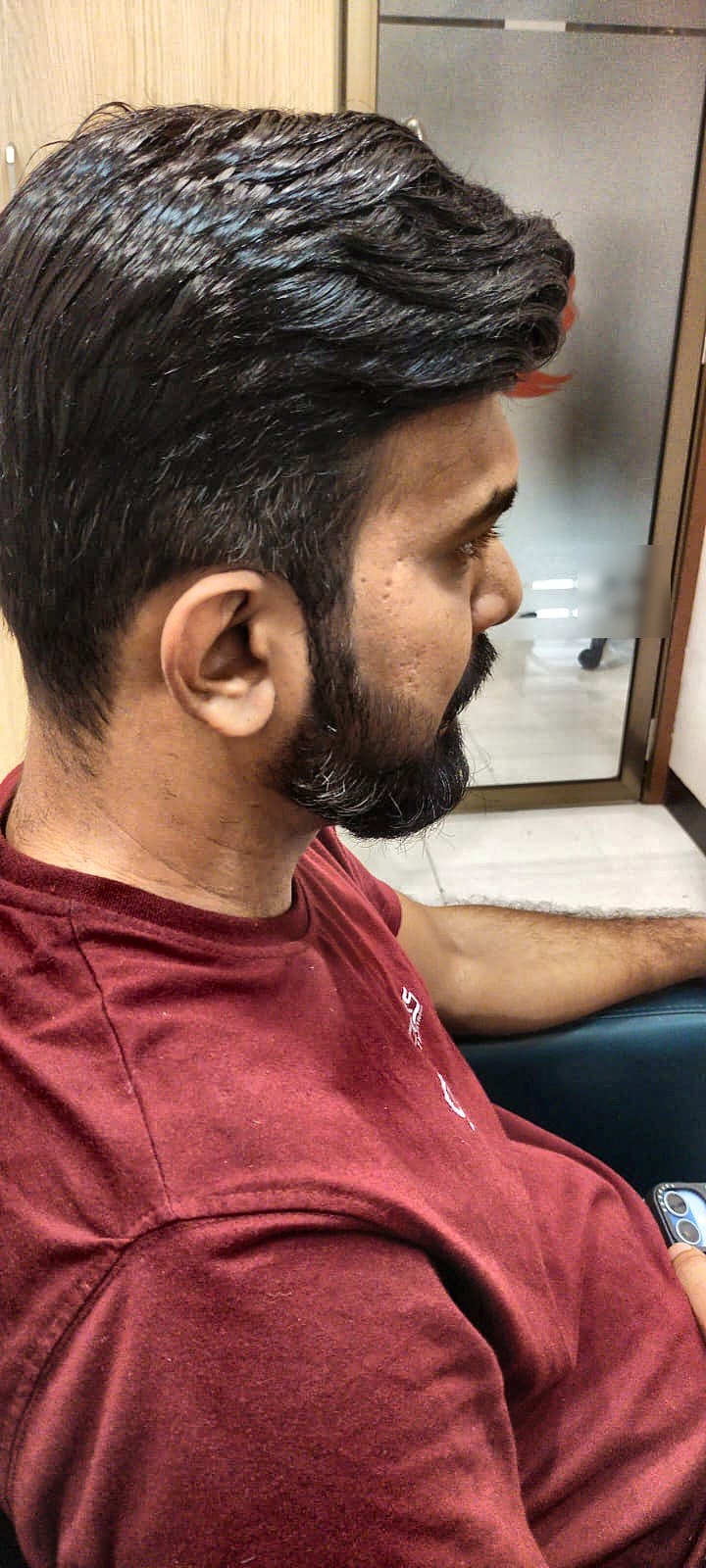
Table of contents
The core difference in one line
A hair transplant surgically redistributes existing hair follicles from the back of your scalp to the front. A hair patch bonds a custom-built lace-and-hair system onto the thinning area. One is a permanent one-time procedure; the other is a monthly-maintained wearable.
Cost — the real numbers
In Mumbai and Navi Mumbai, a quality FUE hair transplant runs ₹80,000 to ₹3,50,000 depending on graft count. It's a one-time cost, but graft survival isn't guaranteed and touch-up sessions add ₹40,000–₹80,000 more.
A premium hair patch runs ₹15,000–₹45,000 upfront and ₹1,500–₹2,500 per month in service. Over 5 years that totals roughly ₹1.2–₹2.5 lakh — often lower than a mid-tier transplant, with fully predictable results.
Results — how they look, day one and year three
A hair patch looks perfect on day one. Ready-styled, dense, immediately Instagram-ready. Nothing to grow, nothing to wait for.
A transplant takes 8–14 months to show final results. New follicles shed in month one, regrow slowly, and don't reach full density until well past a year. Some grafts don't take. And native hair around the transplant zone often continues thinning, requiring maintenance medication like finasteride.
Pain, recovery and downtime
Transplant: 4–8 hours under local anaesthesia, followed by 7–14 days of visible scabbing and swelling, no gym for 3 weeks, no swimming for a month, and sleep-position restrictions to protect grafts.
Hair patch: 90-minute fitting, zero recovery, walk out styled and go straight to work, gym or a wedding.
Risk profile
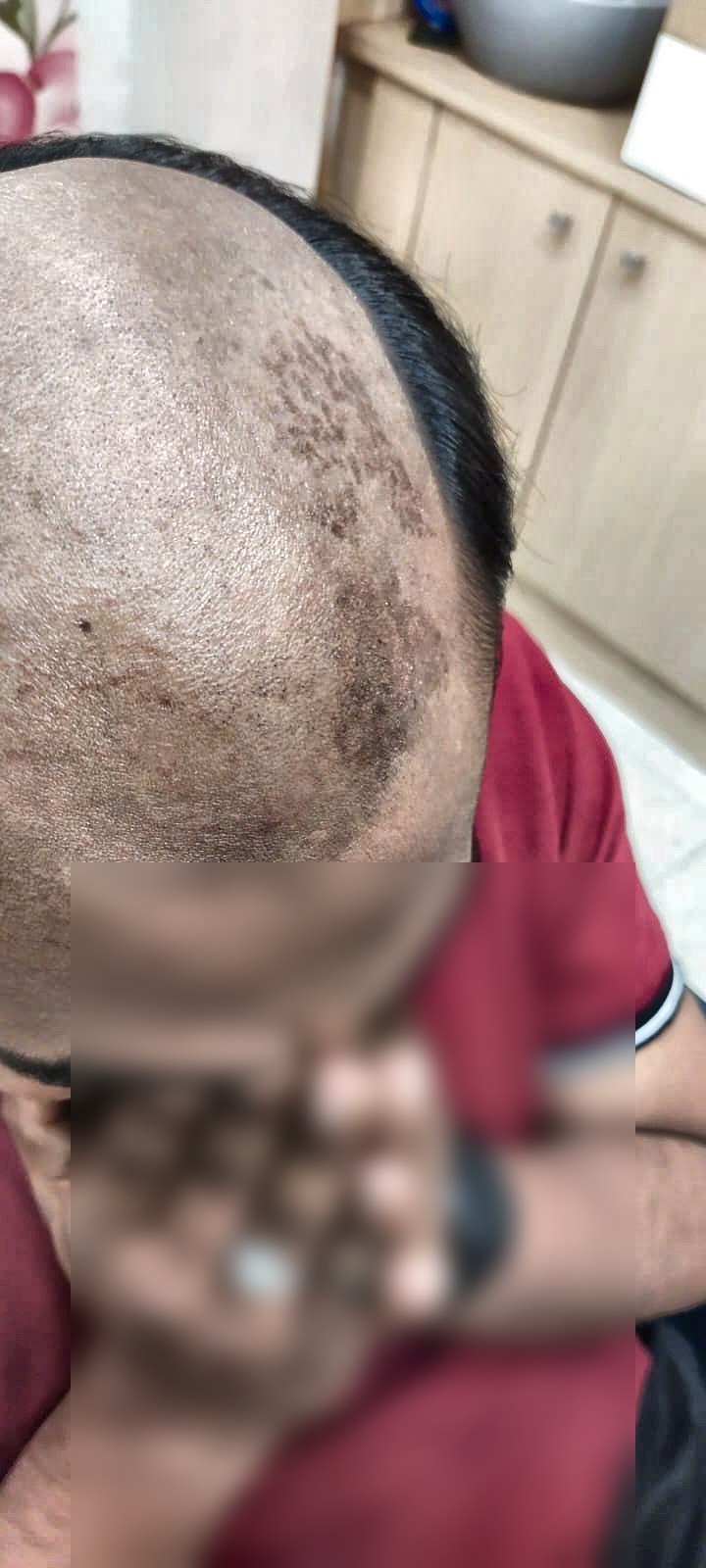
Transplants are surgical procedures. Real risks include infection, scarring (linear at the donor site for FUT, tiny dot scars for FUE), overharvesting the donor area, unnatural growth angles, and shock loss of native hair. Reversal is not really an option.
Hair patches carry no surgical risk. Worst case: switch back to fully natural hair by removing the patch. Some people develop mild scalp sensitivity to certain adhesives, easily fixed by switching bonding type.
Who should pick which?
- You have Norwood 2–3 hair loss, don't mind a year of waiting, have ₹1.5L+ budget, and want a truly one-time solution → transplant is worth evaluating.
- You have Norwood 4–7 hair loss, want results today, need a reversible option, or don't want surgery → hair patch is the clear pick.
- You want a photo-ready look for a wedding in 3 months → hair patch is the only realistic option.
- You have a medical condition (diabetes, autoimmune) that complicates surgery → hair patch is safer.
Can you combine both?
Yes — many of our clients have. A transplant restores the frontal hairline while a small crown patch fills the back. It's the highest-quality hybrid approach for men in the Norwood 5–6 range and is what we recommend when the client has both budget and patience.
Frequently Asked Questions
Does a transplant always work?
No. Graft survival rates run 85–95% at the best clinics, lower elsewhere. Native hair around the transplant can also continue thinning, requiring follow-up sessions or medication.
Is a hair patch cheaper long-term than a transplant?
Over 5 years the total spend is often similar. But a patch has zero surgical risk and delivers instant results, which is why cost isn't the only deciding factor.
Can I switch from a patch to a transplant later?
Yes. A patch doesn't damage your existing hair or scalp, so you can transition to a transplant any time.
Ready to start your transformation?
Speak with a senior stylist. Get a custom recommendation, honest pricing, and no pressure.